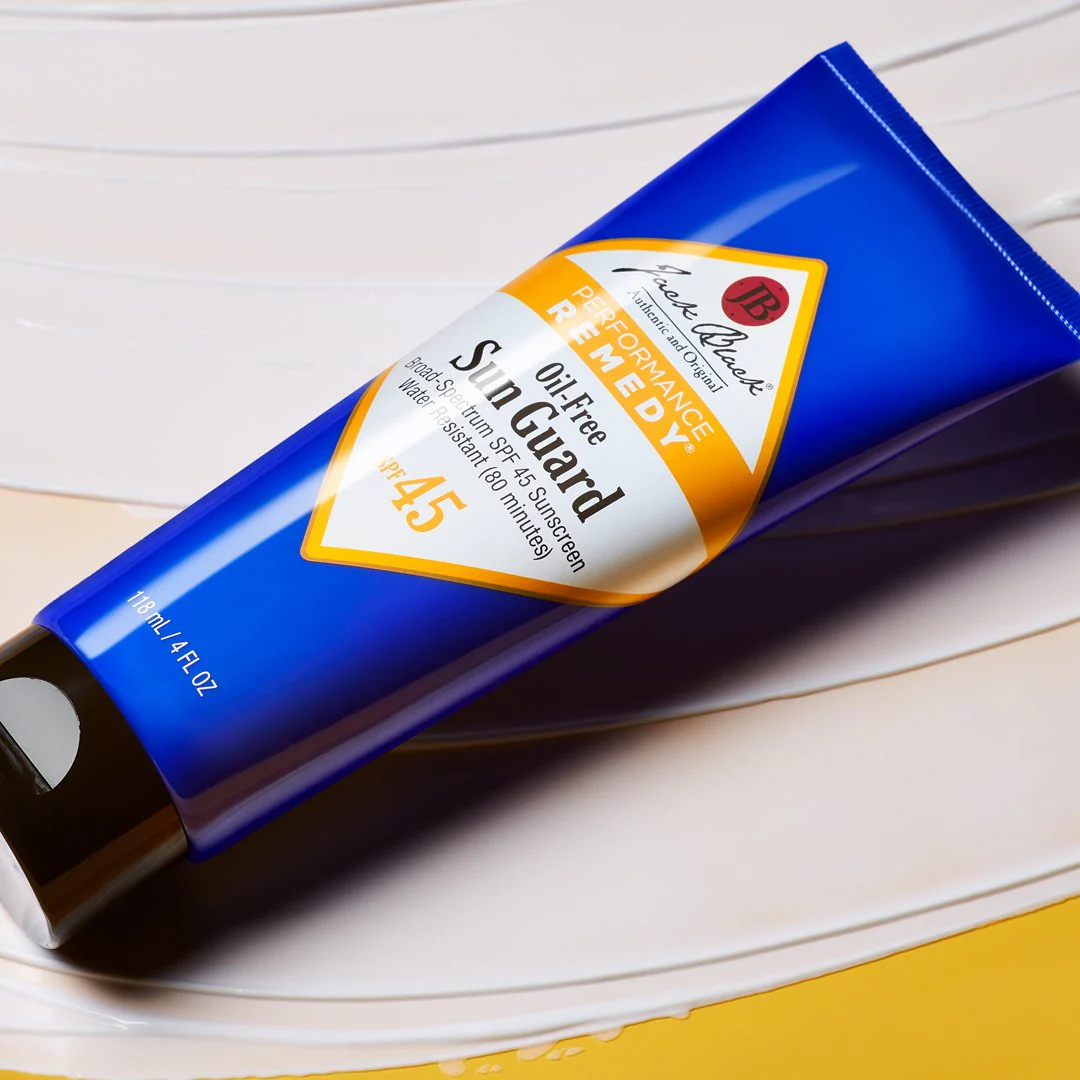
I play pickleball and I’m on the hunt for the best sport sunscreen. Sport sunscreens promise a lot — no white cast, no stinging, all-day sweat resistance — but most don’t fully deliver on it. That’s what brought me to Jack Black’s Sun Guard Sport SPF 45.
Does it actually stay put through sweat and water? Is the broad-spectrum protection real, or is it riding on the zinc oxide alone? And what are you actually getting with a mineral-chemical hybrid formula like this one?
The formula is built around 8% zinc oxide, backed up by two chemical UV filters — octinoxate and octisalate — plus a couple of bonus actives in vitamin C and calendula. Zinc oxide is carrying most of the load, and it’s a strong broad-spectrum performer on its own. The chemical filters extend the coverage and bump the SPF number up, but they come with tradeoffs worth knowing about before this becomes your everyday sunscreen.
There’s a lot to like about how it wears. There are also a few things worth knowing before you commit to it. Here’s my full review and analysis below.
Key Takeaways
- Broad-spectrum SPF 45 protection anchored by 8% zinc oxide — real UVA/UVB coverage, not just a number on the label.
- Oil-free and fast-absorbing, built specifically for sweat and movement.
- Very water and sweat resistant — won’t run into your eyes mid-workout.
- Fragrance-free, paraben-free, phthalate-free formulation.
- Bonus vitamin C and calendula add antioxidant and soothing benefits.
- Some of the filters fade fast in direct sun, so reapplication matters more than the SPF number suggests.
- Independent ingredient analysis rates overall irritation potential as high, despite the clean-label marketing.
- Zinc oxide can leave a white cast, more noticeable on medium-to-deep skin tones.
- One filter isn’t considered reef-friendly, worth a look if beach days are your main use.
1. What Is Jack Black Sun Guard Sport SPF 45?
This is an oil-free, water-and-sweat-resistant SPF 45 built for one job: staying on through movement. It’s a hybrid formula — part mineral, part chemical — made for active men who need sun protection that survives an actual workout, not just a walk to the car and back.
The claims are pretty specific: won’t run into your eyes during intense activity, holds up through sweat and water, delivers broad-spectrum coverage. That last one matters most — a sunscreen that only blocks UVB is only doing half the job, no matter what the SPF number says.
Whether it lives up to any of that comes down to what’s actually in the tube — and that’s where things get more interesting.
2. The Pros
After a couple of weeks testing it on the pickleball court, I never once got that tight, sunburned feeling on my face by hour two — the thing that used to happen with SPF 30 formulas I’ve tried before.
The oil-free finish held up too. This absorbs fast and doesn’t sit on skin the way a lot of “sport” sunscreens claim to but don’t.
Water and sweat resistance held up as well. I tested it through a real swim and it stayed put, without needing to reapply every twenty minutes out of paranoia.
My skin gets irritated by fragrance, and this wasn’t an issue over two weeks of daily use.
There are also a couple of bonus ingredients in there — vitamin C and calendula — doing some quiet extra work on the antioxidant and calming front, but these are likely too low in concentration to make a difference.
3. The Cons
The irritation rating surprised me. Independent formula analysis (WhatsInMyJar) rates this product’s overall irritation potential as high, and that doesn’t fully match how it felt on my skin during testing. I’m still weighing that against my own two weeks of use, but the ingredient data isn’t something I’d brush off.
The reapplication math is more annoying than I expected going in. The reapplication math is more annoying than I expected going in. A couple of the sun filters in here break down fast in direct light, so the 45 on the label works more like a starting point than a number you can coast on for a whole day outside. I skipped reapplying on a long day out and paid for it a little with some redness by late afternoon. Lesson learned — set a timer if you’re out longer than two hours.
There’s also a white cast when you first rub it in. It blends out after a minute, but it’s there, and it tends to show up more on medium-to-deep skin tones.
And one more thing — one of the chemical filters isn’t great for reef systems, so factor that in if beach days are the main use case.
4. Who Is It For — And Who Should Skip It?
This one’s built for active men — athletes, outdoor workers, anyone whose day involves sweat, movement, or both. If you have oily or combination skin, the oil-free, fast-absorbing formula makes an actual difference day to day.
You may want to skip it if you have very sensitive skin — the irritation profile leans higher than a pure mineral formula. Same goes if you’re regularly swimming in the ocean and care about reef impact, or if you specifically want to avoid chemical UV filters altogether.
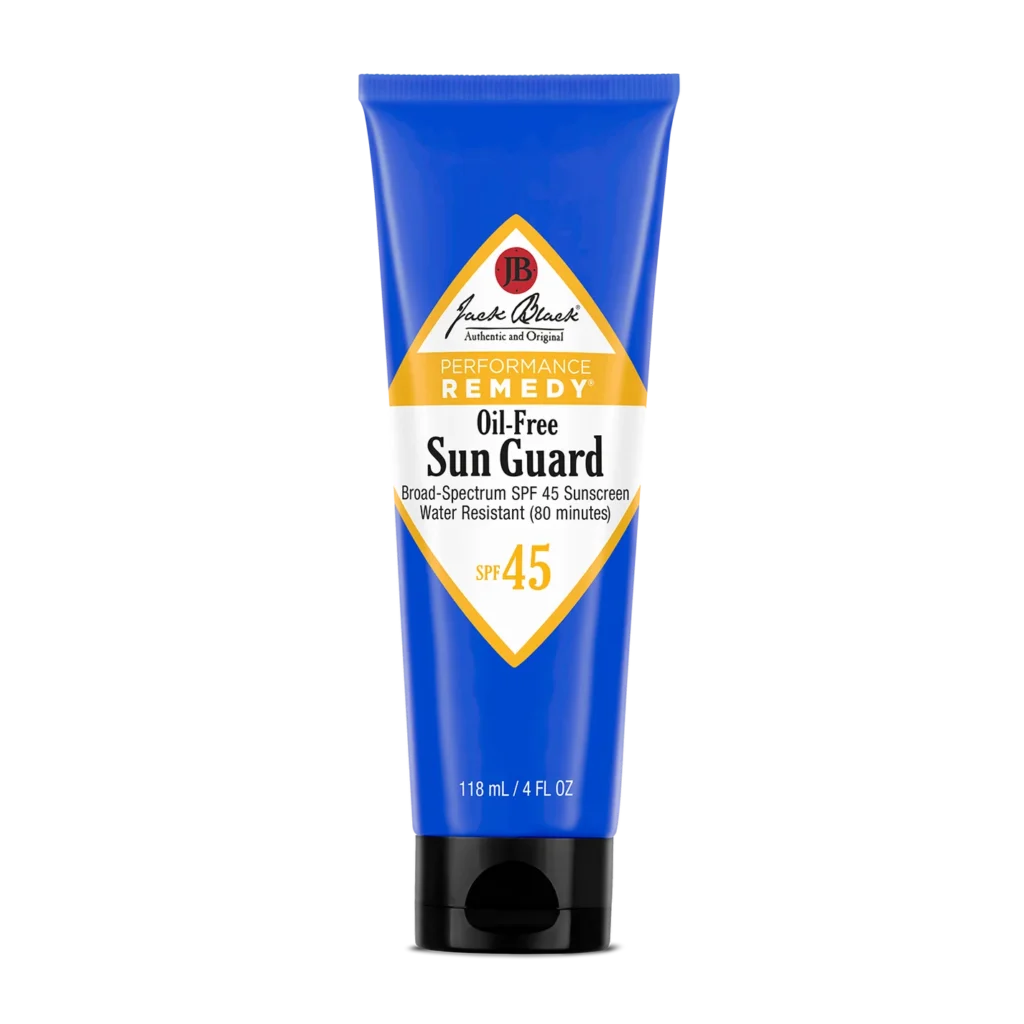
SHOP: Jack Black Sun Guard SPF 45
The Bottom Line
Jack Black Sun Guard Sport SPF 45 is a solid pick for active men with normal-to-oily skin who need something that won’t slide, drip, or sit heavy during a workout. Zinc oxide is doing most of the actual work here, which is why the broad-spectrum claim holds up when you’re actually sweating through a workout. The chemical filters riding alongside it round out the coverage and help push the SPF number higher.
I use it sometimes for pickleball but am still on the search for something with less white cast. Where I’d hesitate is if you’ve got very sensitive skin, care about reef impact, or want something that’s purely mineral.
Overall Rating: 7/10
Ingredient List:
- Zinc oxide (8%) — the main sun-blocking ingredient, and the one doing the most real work. Mineral filter, covers UVA and UVB, doesn’t break down in sunlight.
- Octinoxate (7.5%) + octisalate (3%) — two chemical filters that boost the SPF number and extend coverage, but both fade faster in direct sun than zinc oxide does — hence the reapplication note above.
- Vitamin C — an antioxidant, mops up some of the free-radical damage UV exposure causes that sunscreen alone doesn’t cover.
- Calendula flower — a calming, anti-inflammatory botanical, useful for skin already dealing with sweat and friction.
- Silicones (cyclopentasiloxane, dimethicone) — no sun-protection function, just there for the smooth, fast-absorbing feel.