Is Particle Face Cream worth it? What are the ingredients in Particle Face Cream? Is Particle Face Cream good for oily skin? Does Particle publish their full ingredient list?
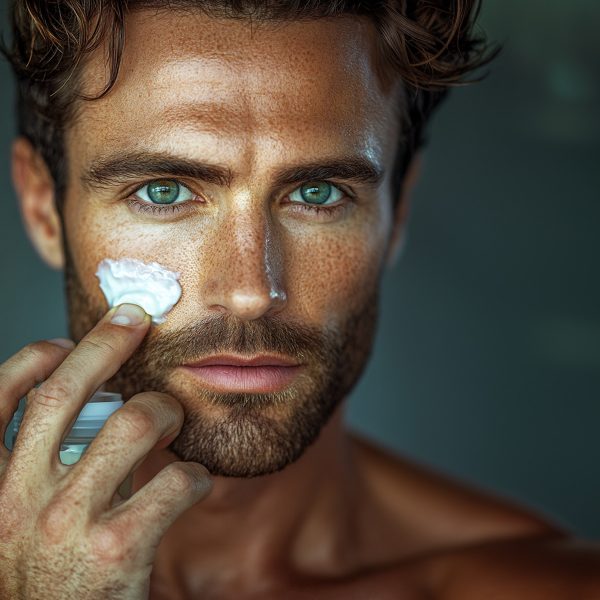
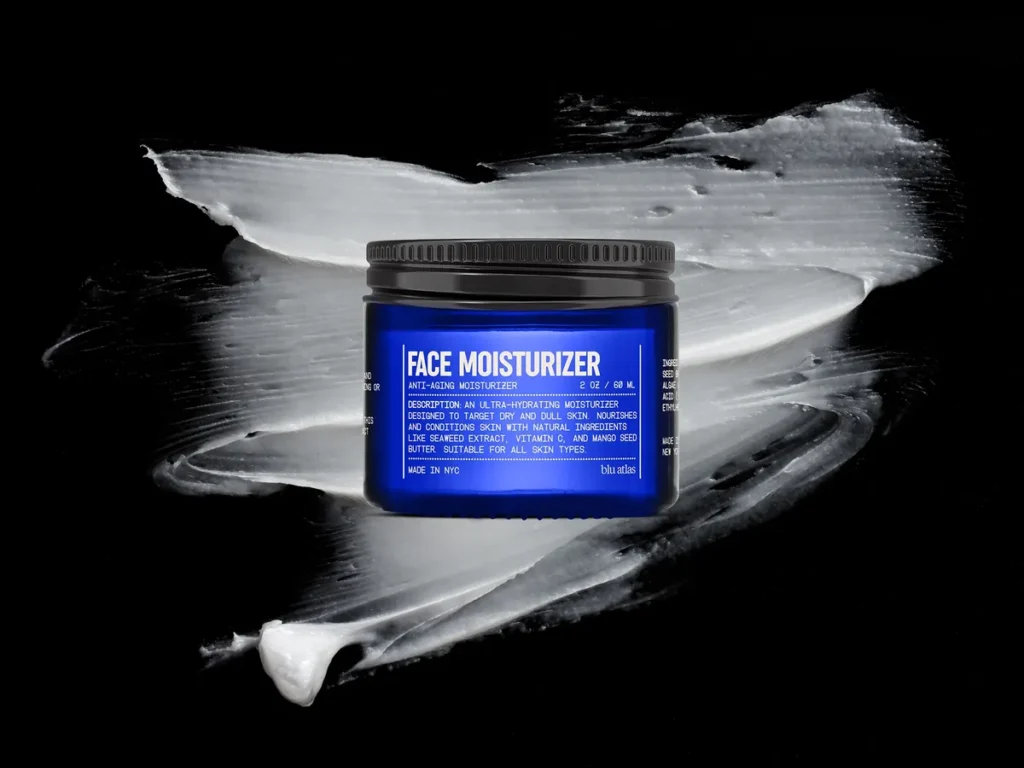
One of the most heavily advertised men’s face creams on the market right now is the Particle Face Cream. If you’ve spent any time on YouTube, TikTok, or basically anywhere online in the last two years, you’ve seen it. The brand markets it as a “6-in-1 anti-aging cream for men” — which, as a claim, should immediately raise your skeptic antenna, because nothing is six things at once without a catch.
Here’s the reality: the ingredient lineup is genuinely good. Several of the actives they’ve chosen are well-researched, effective, and make sense in an anti-aging moisturizer for men. But the marketing around this product is something I have real problems with — and there are specific skin types for whom this cream is almost certainly a bad match, despite what the brand tells you.
My detailed Particle Face Cream review is below.
Key Takeaways:
- Particle Face Cream contains a solid core of evidence-backed actives — niacinamide, hyaluronic acid, peptides, lactic acid, squalane, and caffeine — that are legitimately useful in a men’s anti-aging moisturizer.
- The formula is on the richer side, thanks to shea butter and jojoba seed oil, which makes it a poor fit for oily or acne-prone skin despite the brand’s “all skin types” claim.
- At $69 for what appears to be a 50ml jar, the price is defensible — but Particle does not publish their full INCI ingredient list, which makes it impossible to verify whether the actives are at functional concentrations.
- The brand has a documented pattern of creating fake third-party review websites designed to look like independent editorial content. That’s worth knowing before you buy.
Table of Contents
- Is Particle Face Cream good?
- What are the ingredients in Particle Face Cream?
- Is Particle Face Cream good for oily skin?
- Is Particle Face Cream worth the price?
- Product Review
- The marketing problem
- Pros & Cons
1. Is Particle Face Cream good?
Yes — with qualifications. For men with dry to normal skin in their 40s and 50s who are looking for a single moisturizer that covers hydration, some brightening, early anti-aging treatment, and post-shave soothing, Particle Face Cream is a reasonable option. The ingredient philosophy is sound and several of the highlighted actives have real research behind them.
The qualifications are these: the formula is richer than it needs to be, Particle doesn’t disclose their full ingredient list, and the brand engages in marketing practices that should give any thoughtful consumer pause. I’ll get into all of that below.
2. What are the ingredients in Particle Face Cream?
Particle highlights 12 “premium ingredients” on their product page: hyaluronic acid, niacinamide, acetyl hexapeptide-8, squalane, caffeine, urea, lactic acid, allantoin, jojoba seed oil, vitamin E, coffee seed extract, and shea butter.
Important caveat before I go through these: this is not the full INCI ingredient list. Particle does not publish their complete ingredient list with concentrations on their website, which is a problem I’ll address in the marketing section. What they show you is a curated selection of the ingredients they want you to see. That distinction matters.
That said, here’s what these highlighted ingredients actually do:
Hyaluronic Acid is a humectant that draws moisture into the skin. Well-researched, effective, appropriate for all skin types. No controversy here.
Niacinamide (Vitamin B3) is probably the strongest ingredient in this formula. It reduces the appearance of pores, evens skin tone, calms redness, regulates oil production, and strengthens the skin barrier. It’s gentle, well-tolerated, and one of the most versatile actives in skincare. Its inclusion is a genuine point in Particle’s favor.
Acetyl Hexapeptide-8 is a signal peptide that’s been studied for its ability to reduce the depth of expression lines with consistent use. The topical peptide research is more modest than the marketing language suggests, but it’s not nothing. A reasonable addition for an anti-aging formula.
Squalane is a lightweight emollient that closely mimics your skin’s own sebum. It absorbs cleanly, doesn’t leave a greasy film, and is well-tolerated by most skin types. Good ingredient.
Caffeine primarily works as a vasoconstrictor — it temporarily reduces puffiness and dark circles, especially around the eyes. It has antioxidant properties as well. Best for short-term visual improvements rather than long-term treatment.
Urea is a humectant and mild keratolytic. At low concentrations (as you’d expect in a moisturizer), it softens skin texture and helps with hydration. Underrated ingredient that doesn’t get enough credit.
Lactic Acid is an alpha-hydroxy acid that exfoliates the surface of the skin, improves texture, and with consistent use can stimulate collagen production. Gentler than glycolic acid, sensible for a daily-use product. At lower concentrations it functions more as a brightening and smoothing ingredient than a clinical exfoliant.
Allantoin is a soothing, anti-inflammatory ingredient that promotes cell regeneration and calms irritation. It’s a smart inclusion for a men’s product given that shaving regularly stresses the skin barrier.
Jojoba Seed Oil is technically a wax ester with a structure similar to human sebum, which is why it absorbs well and has a long shelf life. However — and this is important for oily skin types — jojoba is moderately comedogenic for some people.
Vitamin E (Tocopherol) is an antioxidant that protects against environmental damage. Standard and sensible.
Coffee Seed Extract pairs with caffeine for additional antioxidant coverage. Supporting ingredient, not a star player.
Shea Butter is where the formula gets complicated for certain skin types. It’s a rich, occlusive emollient that’s excellent for dry skin. For oily, combination, or acne-prone skin, it can be a problem. More on this below.
3. Is Particle Face Cream good for oily skin?
No — and the brand’s claim that it works for “all skin types” is, in my opinion, misleading.
When you combine shea butter and jojoba seed oil in a cream formula, you’re building something that skews rich and occlusive. For dry or normal skin, that’s great — it seals in hydration and supports the barrier. For oily or acne-prone skin, those same properties can trap sebum, clog pores, and trigger breakouts.
Niacinamide and lactic acid are genuinely good for oily skin. But they don’t override the formula’s overall character, which is that of a richer moisturizer calibrated for drier skin types.
If you tend to get shiny by noon without anything on your face, break out from rich creams, or have combination skin with a congested T-zone — approach this with caution. I’d strongly recommend buying one unit, testing it for 3 weeks before committing to the multi-pack pricing, and paying attention to how your skin responds. The 30-day return window gives you some protection here.
For oily or acne-prone skin, you’d be better served by a lighter gel or gel-cream moisturizer with niacinamide as the primary active.
4. Is Particle Face Cream worth the price?
At $69 for a single unit (approximately 50ml based on the jar dimensions — the brand doesn’t clearly state the size, which is itself a minor annoyance), you’re paying roughly $1.38 per ml. That’s mid-to-high pricing for a men’s moisturizer — mid-tier in this category is more like $30–50, so Particle is sitting above that without quite reaching luxury territory.
The “6-in-1” positioning is largely marketing. This is a moisturizer with a decent active ingredient profile — it’s not replacing your serum, your toner, or your cleanser, and treating it like it does is how people end up with an incomplete routine and underwhelming results. Judge it as what it actually is: a mid-to-high priced moisturizer with anti-aging actives, and ask whether the ingredients justify the cost at that level.
Where that calculation gets murky: ingredient concentration. A product can list niacinamide prominently but include it at 0.2% instead of the 5–10% that research shows to be effective. Without a published INCI list with percentages, there’s no way to verify whether the actives in this formula are at meaningful concentrations or just present enough to be listed. Particle doesn’t give you that information, which means you’re buying partially on faith.
At the 3-unit price ($49 per unit), the value improves. But I’d recommend testing one unit first.
5. Product Review
The cream itself has a texture that sits between a thick lotion and a light balm — not what I’d call lightweight, but it absorbs reasonably well without leaving a heavy film. It has a mild, inoffensive scent. On dry skin, it feels immediately comfortable and hydrating. On my combination skin, it felt slightly too rich in the T-zone by midday, which tracks with the formula profile.
The pump bottle is functional and hygienic — better than a jar for preserving the actives and dosing consistently.
I noticed a modest improvement in skin texture and tone over about three weeks of consistent use, particularly around the eye area where the caffeine seems to do visible work. Whether that improvement is attributable to specific actives being at clinical concentrations or simply to the hydration benefits of consistent moisturizer use, I genuinely can’t say without the full ingredient data.
What I can say is that the formula didn’t cause irritation, played well with SPF over the top, and left skin looking noticeably more even-toned than before I started using it. For dry to normal skin, especially men 40+, I think it delivers on the basic promise.
6. The marketing problem
I want to be direct about this, because I think it’s material to the buying decision.
Particle does not publish their full INCI ingredient list. The 12 highlighted ingredients on their product page are a marketing selection, not an ingredient disclosure. A real INCI list shows you everything in the formula in descending order of concentration. Particle’s decision not to publish this is a deliberate choice, not an oversight — and it prevents you from doing the kind of independent ingredient analysis that would tell you whether the actives are at effective concentrations.
Particle has a documented pattern of creating fake third-party review websites. If you search “Particle Face Cream review,” a significant proportion of the results are websites that look like independent editorial skincare publications but are actually Particle-sponsored content. They rank well, they’re written to appear objective, and they invariably conclude that Particle is the right choice. Real independent reviews include criticism. Real reviewers note when a product isn’t right for certain skin types. If a review reads like a sales page wearing an editorial costume, it probably is.
None of this means the product doesn’t work. Based on the highlighted ingredient profile, for the right skin type, it likely does. But you deserve to know how the brand operates before you decide whether to buy from them.
7. Pros & Cons
What I like about it: A genuinely solid highlighted ingredient lineup. Niacinamide and lactic acid together are a smart combination for brightening and texture. The peptide is a reasonable anti-aging addition. Squalane and allantoin are quality supporting ingredients. The pump format is better than a jar. The 30-day return policy reduces the purchase risk.
What I don’t like about it: The brand doesn’t publish a full INCI list — which makes it impossible to verify active concentrations. The formula is too rich for oily or acne-prone skin despite the “all skin types” claim. The fake third-party review ecosystem is a genuine red flag about how the brand conducts itself. And the size isn’t clearly stated anywhere on the product page.
Who it’s for: Men with dry to normal skin, 35–60, looking for a single multi-tasking moisturizer that covers hydration, some anti-aging treatment, and post-shave soothing. If that’s you, the 30-day return window makes it worth trying.
Who should skip it: Men with oily, combination, or acne-prone skin. Men who prioritize ingredient transparency. Men who want clinical-level actives at verified concentrations.
SHOP: Particle Face Cream — $69 for one unit, $49/unit for three — at particleformen.com
The Bottom Line
Particle Face Cream is a solid moisturizer. The core ingredients are well-chosen, the formula is thoughtfully built for anti-aging and hydration, and for the right skin type it will deliver noticeable results with consistent use. There’s nothing here that embarrasses itself.
The problem is the price. At $69, you’re in territory where the competition is serious — and unlike Particle, many of those competitors publish their full ingredient lists, don’t hide behind fake review sites, and are upfront about what their products actually do. A moisturizer at this price point needs to earn its place in your routine on merit, not marketing. Particle gets partway there on the ingredient side, but the lack of transparency around concentrations and the aggressive manufactured-hype ecosystem around the brand makes it hard to recommend without reservations.
If you have dry to normal skin and you’re drawn to the formula, the 30-day return policy makes it a low-risk try. But don’t let the ads convince you it’s replacing your whole routine — it’s a moisturizer, a good one, and that’s enough.
The Highlighted Ingredient List of the Particle Face Cream:
Hyaluronic Acid, Niacinamide, Acetyl Hexapeptide-8, Squalane, Caffeine, Urea, Lactic Acid, Allantoin, Jojoba Seed Oil, Vitamin E (Tocopherol), Coffee Seed Extract, Shea Butter.
Note: This is Particle’s marketed ingredient selection, not a complete INCI list. Particle does not publish their full ingredient list publicly.