Is Lab Series Max LS Lotion worth it? What are the ingredients in Lab Series Max LS Lotion? Does Lab Series contain niacinamide? Is Lab Series good for men’s skin?
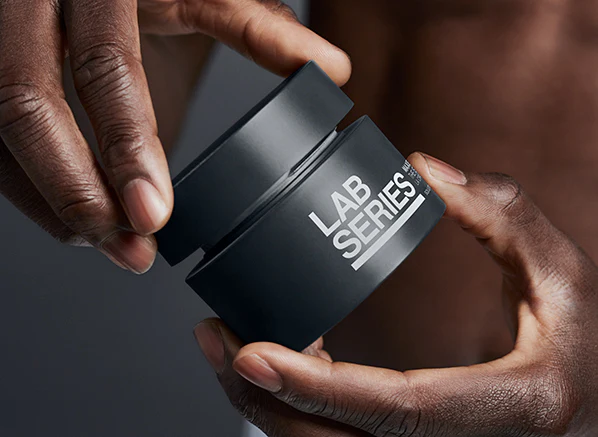
Lab Series is an Estée Lauder brand built specifically for men’s skincare — one of the few prestige lines that has genuinely committed to men’s skin as a distinct formulation challenge rather than repackaging unisex products in darker packaging. The Anti-Age Max LS Lotion is their current flagship daily moisturizer, built around what they call a “5% Niacinamide + Resveratrol complex” and a peptide stack targeting collagen, elastin, and fibronectin production. It retails for around $102 for 1.5 oz (45ml).
The formula is more interesting than most men’s prestige moisturizers reviewed here. Niacinamide is the second ingredient — before the silicones and emollients — which is an unusually aggressive and well-thought-out positioning. There’s a genuine three-peptide stack and resveratrol, and the brand is more forthcoming about their active concentrations than most. But the pricing math doesn’t hold up at 45ml, the silicone-heavy base creates problems for oily skin, fragrance is present, and that “5% complex” claim requires unpacking.
My full review below.
Key Takeaways:
- Niacinamide at position two is the most encouraging signal in this formula — it suggests the concentration is meaningful, and the brand’s claim of a “5% niacinamide + resveratrol complex” broadly supports that. This is a legitimate anti-aging active at a likely-functional level.
- The peptide stack — Acetyl Hexapeptide-8, Palmitoyl Tripeptide-1, Palmitoyl Tetrapeptide-7, and Palmitoyl Hexapeptide-12 — is one of the better peptide lineups in men’s skincare at this price tier. These are credible, well-studied signal peptides.
- The “5% complex” language is worth scrutinizing. The brand says 5% niacinamide + resveratrol combined — not 5% niacinamide alone. The split between those two ingredients is unstated, which matters because resveratrol at any meaningful concentration in a water-based formula is notoriously difficult to stabilize.
- Dimethicone at position three and Trisiloxane at position eight make this formula silicone-heavy. Silicones create a film on skin that can trap debris and interfere with other actives; for oily or combination skin, the daily buildup is a concern.
- Fragrance (Parfum) is present. Lab Series is an Estée Lauder brand with access to sophisticated fragrance development, but fragrance in a daily anti-aging moisturizer remains an unnecessary sensitization risk.
- At approximately $102 for 45ml — $2.23 per ml — this is luxury pricing. The formula earns more of that than most, but not all of it.
Table of Contents
- What is the Lab Series Max LS Lotion?
- What are the ingredients?
- Is the niacinamide concentration meaningful?
- What about the peptide stack?
- What’s the problem with the resveratrol claim?
- Is this good for oily skin?
- Is it worth $65 for 45ml?
- Product Review
- Pros & Cons
1. What is the Lab Series Max LS Lotion?
The Anti-Age Max LS Lotion is Lab Series’s primary daily anti-aging moisturizer — positioned as a lightweight lotion rather than a cream, designed for daily use morning and night. The brand markets it on three pillars: the 5% niacinamide + resveratrol complex for cellular energy and barrier function, a peptide blend targeting collagen and elastin production, and a formula calibrated for men’s thicker, higher-sebum skin.
Lab Series is part of the Estée Lauder Companies, which means genuine R&D resources and access to proprietary ingredient technology. The Max LS line is their premium men’s anti-aging range. The Men’s Journal 2024 Grooming Award for Best Travel Anti-Aging Cream reflects that the formula has real merit — more than most press awards indicate.
2. What are the ingredients?
Full INCI list:
Water/Aqua/Eau, Niacinamide, Dimethicone, Butylene Glycol, Glycerin, Jojoba Esters, Coco-Caprylate/Caprate, Trisiloxane, Trehalose, Acetyl Glucosamine, Hydrogenated Lecithin, Diethylhexyl Succinate, Resveratrol, Acetyl Hexapeptide-8, Palmitoyl Tripeptide-1, Palmitoyl Tetrapeptide-7, Palmitoyl Hexapeptide-12, Lactobacillus Ferment, Sigesbeckia Orientalis Extract, Whey Protein, Pisum Sativum (Pea) Extract, Bambusa Vulgaris (Bamboo) Extract, Laminaria Digitata Extract, Hypnea Musciformis Extract, Laminaria Saccharina Extract, Salicylic Acid, Caffeine, Lauryl PEG-9 Polydimethylsiloxyethyl Dimethicone, Caprylyl Glycol, Sodium PCA, Sodium Hyaluronate, Dipotassium Glycyrrhizate, Aminopropyl Ascorbyl Phosphate, Potassium Gluconate, Acrylates/C10-30 Alkyl Acrylate Crosspolymer, Tromethamine, PEG-8, Glyceryl Polymethacrylate, Propylene Glycol Caprylate, Hexylene Glycol, Disodium EDTA, Glucosamine HCl, Carbomer, Polysorbate 20, Fragrance (Parfum), Tocopheryl Acetate, BHT, Tocopherol, Phenoxyethanol, Potassium Sorbate
Water — standard base.
Niacinamide — position two. This is the standout formulation decision and where Lab Series earns credibility. Niacinamide at position two means it’s the dominant active in the formula after water. It’s a multi-tasking anti-aging ingredient with strong research support for pore minimization, sebum regulation, barrier function, tone evening, and collagen support. Its prominence here is a real positive.
Dimethicone — position three. A silicone emollient that creates a smooth, non-greasy finish and helps other ingredients spread evenly. The issue is that dimethicone creates a physical film on the skin. More on this below.
Butylene Glycol — a humectant and solvent. Standard, functional.
Glycerin — position five. A solid humectant. Its position behind both dimethicone and butylene glycol is slightly unusual — this is a more film-forming, active-forward formula than a traditional humectant-first moisturizer.
Jojoba Esters — position six. Derived from jojoba oil, these waxy esters condition the skin without a greasy feel. Well-tolerated across skin types.
Coco-Caprylate/Caprate — a lightweight emollient ester. Absorbs cleanly.
Trisiloxane — position eight. A lightweight silicone that helps spread the formula and gives it the “ultra-light” texture the name references. Like dimethicone, it forms a surface film.
Trehalose — a sugar-derived humectant with some evidence for skin protection under environmental stress. Nice addition.
Acetyl Glucosamine — position ten. A derivative of glucosamine with some evidence for skin brightening and hyaluronic acid synthesis support. Modest but legitimate.
Hydrogenated Lecithin — a phospholipid emollient that supports the skin barrier. Good ingredient.
Resveratrol — position thirteen. An antioxidant from grape skin with interesting research at the cellular level. The topical application story is more complicated — resveratrol is notoriously difficult to stabilize in water-based formulas and has poor skin penetration without delivery enhancement. More on this below.
Acetyl Hexapeptide-8, Palmitoyl Tripeptide-1, Palmitoyl Tetrapeptide-7, Palmitoyl Hexapeptide-12 — positions fourteen through seventeen. A four-peptide stack. These are well-studied signal peptides with evidence for collagen synthesis stimulation, matrix metalloprotease inhibition, and wrinkle reduction. Having four peptides in a formula at positions fourteen through seventeen suggests they’re present at meaningful concentrations collectively. This is the most impressive ingredient cluster in the formula.
Lactobacillus Ferment — a probiotic-derived ingredient for microbiome support and barrier function. A sensible modern addition.
Salicylic Acid — position twenty-six. Present and listed, which means it’s doing some mild exfoliating and pore-clarifying work. At this position the concentration is likely low (0.1–0.5%), but even at low levels salicylic acid provides ongoing pore maintenance. A smart inclusion for a men’s moisturizer.
Caffeine — position twenty-seven. Mild anti-puffiness and antioxidant properties.
Sodium Hyaluronate — position thirty-two. A humectant and hydration ingredient. Its position late in a 51-ingredient list means it’s present at a lower concentration than the Niacinamide, but hyaluronic acid is effective at low concentrations as a humectant.
Aminopropyl Ascorbyl Phosphate — position thirty-three. A vitamin C derivative — better than Ascorbyl Glucoside (which appears in some competing formulas) but still requires enzymatic conversion to active vitamin C. A reasonable choice for a stabilized vitamin C form in a daily lotion, though a dedicated vitamin C serum would deliver more.
Fragrance (Parfum) — position forty-five. Near the end of the list, meaning concentration is relatively low, but its presence in a daily-use anti-aging moisturizer is worth flagging.
BHT — a synthetic antioxidant used as a preservative and to prevent ingredient degradation. Effective and widely used; occasionally flagged in natural skincare communities but considered safe by regulatory bodies at cosmetic concentrations.
3. Is the niacinamide concentration meaningful?
The brand claims a “5% [Niacinamide + Resveratrol] complex.” This is where the language gets careful.
5% niacinamide alone is the benchmark concentration where the majority of clinical research on pore minimization, sebum regulation, and tone evening has been conducted. But Lab Series says “5% niacinamide + resveratrol” — meaning the combined complex is 5%, not niacinamide alone at 5%. Depending on the split, the actual niacinamide percentage could be 4.5%, 4%, 3.5%, or lower.
That said, niacinamide at position two in the ingredient list — before all the silicones and emollients — strongly suggests it’s present at a higher concentration than most daily moisturizers offer. Even at 3–4%, niacinamide delivers real activity. The evidence for niacinamide at 2% is meaningful; at 4%+ it’s well within clinically studied territory. The positioning in the list is more reassuring than most brands’ vague ingredient claims, even if the “5% complex” framing is imprecise.
This is meaningfully better niacinamide positioning than most competitors at this price tier.
4. What about the peptide stack?
Four peptides — Acetyl Hexapeptide-8, Palmitoyl Tripeptide-1, Palmitoyl Tetrapeptide-7, and Palmitoyl Hexapeptide-12 — appearing consecutively at positions fourteen through seventeen.
Palmitoyl Tripeptide-1 and Palmitoyl Tetrapeptide-7 together form the Matrixyl 3000 complex, one of the most studied proprietary peptide combinations in anti-aging skincare with published clinical evidence for collagen synthesis and wrinkle reduction. Palmitoyl Hexapeptide-12 (Matrixyl Synthe’6) has evidence for fibronectin stimulation. Acetyl Hexapeptide-8 (Argireline) has evidence for expression line reduction through muscle-relaxing mechanisms.
Having all four together in positions fourteen through seventeen — rather than scattered through the bottom quarter of the list — suggests they’re collectively at concentrations approaching clinical utility. This is one of the more legitimate peptide inclusions in men’s skincare, and it’s the primary reason this formula deserves more credit than the price skepticism might suggest.
5. What’s the problem with the resveratrol claim?
Resveratrol is a genuinely compelling ingredient at the cellular biology level — it’s been studied extensively for longevity pathways, sirtuins, and oxidative stress. The problem is translating that science to topical application.
Two issues consistently appear in the literature. First, resveratrol is notoriously unstable in aqueous formulas — it oxidizes rapidly when exposed to air and light, losing potency before it reaches the skin. Second, skin penetration is limited without specific delivery enhancement. Lab Series’s formula doesn’t indicate any specialized delivery system for resveratrol. At position thirteen in a water-based lotion formula, stabilization is a real question.
The resveratrol is probably doing some antioxidant work as a formula component. Whether it’s delivering the “cellular energy” benefits the marketing describes at topical concentrations is a bigger claim than the science currently supports.
6. Is this good for oily skin?
Partially. The niacinamide is excellent for oily skin — one of the better ingredients for regulating sebum production with consistent use. The salicylic acid, even at low concentration, provides ongoing mild exfoliation that helps prevent congestion. Both are strong choices for men with oily or combination skin.
The counterbalance is the silicone base. Dimethicone at position three and Trisiloxane at position eight make this formula meaningfully silicone-forward. Silicones don’t penetrate the skin — they sit on the surface — and with daily use they can create a buildup that interferes with how skin breathes, traps sebum and debris, and in some users leads to congestion or milia (small hard bumps, typically around the cheeks and nose). Not everyone with oily skin reacts this way, but it’s a consistent enough problem with silicone-heavy formulas that it’s worth monitoring in the first few weeks of use.
If you have oily skin and want to try this, watch for any increase in blackheads or congestion in the T-zone after 2–3 weeks. That’s the silicone buildup signal.
7. Is it worth $102 for 45ml?
At $2.23 per ml, the Max LS Lotion sits very much in luxury territory. The formula earns more of that price than most: the niacinamide positioning is strong, the peptide stack is among the better ones available in men’s moisturizers at this tier, and the formula architecture shows clear formulation intent rather than decoration.
The gap between the price and what you’re getting is the size — 45ml is not a generous fill for $102. Used twice daily as recommended, this lasts roughly 45 days. At that cadence, the annual cost for a daily moisturizer is over $800. The formula is good but not at a level that separates it definitively from options at two-thirds the price per ml.
8. Product Review
On application, the “ultra-light” positioning is accurate — this absorbs faster than most anti-aging moisturizers and leaves no perceptible residue. The silicone base is largely responsible for that experience: it spreads easily, sets quickly, and creates a smooth, shine-free finish. Under SPF in the morning the formula performs well and doesn’t interfere with layering.
Skin texture improvement is noticeable within 2–3 weeks of consistent use — the combination of niacinamide, salicylic acid, and peptides working cumulatively. Tone evening is slower, as it typically is with niacinamide, showing up more clearly at the 6–8 week mark. The lightweight texture makes twice-daily compliance easy, which matters for cumulative actives.
Men with sensitive skin should patch-test before committing — the fragrance, while low in the formula, is present, and Trisiloxane occasionally causes reactions in reactive skin types.
9. Pros & Cons
What I like about it: Niacinamide at position two is the best positioning of any reviewed moisturizer in this series for that ingredient — concentration is likely meaningful. Four-peptide stack (Matrixyl 3000, Matrixyl Synthe’6, Argireline) at positions fourteen through seventeen is genuinely credible anti-aging technology. Salicylic acid provides ongoing mild exfoliation without a dedicated exfoliant step. Lightweight texture makes twice-daily use practical. Lab Series’s formulation is clearly informed by real skin science, not just marketing ingredients.
What I don’t like about it: The “5% niacinamide + resveratrol complex” claim is deliberately ambiguous — the niacinamide may not be at 5% standalone. Dimethicone at position three and Trisiloxane at position eight create silicone buildup concerns for oily and combination skin with daily use. Resveratrol’s topical bioavailability and stability in this formula type are real limitations. Fragrance is present and unnecessary in a daily anti-aging product. BHT is a minor concern for those avoiding synthetic antioxidant preservatives. 45ml for $102 is a stingy fill for a luxury price. No ceramides for barrier support.
Who it’s for: Men with normal to dry skin who want a lightweight daily moisturizer with above-average niacinamide positioning and a legitimate peptide stack. Men already using a dedicated serum who want a lighter finishing moisturizer. Men who find richer cream formulas too heavy.
Who should think carefully: Men with oily or combination skin — monitor for silicone-related congestion in the first few weeks. Men with fragrance sensitivity. Men doing the math on $65 for 45ml — similar active quality is available at lower per-ml pricing.
SHOP: Lab Series Anti-Age Max LS Lotion — approximately $102 for 1.5 oz at labseries.com
The Bottom Line
The Lab Series Max LS Lotion is better than most men’s prestige moisturizers reviewed here. The niacinamide positioning is among the best in its category, the peptide stack is legitimate rather than decorative, and the brand is clearly formulating with intent rather than marketing ingredients. A Men’s Journal Grooming Award is not surprising given those credentials.
The formula has real limitations though. The silicone base makes daily use problematic for oily skin types. The resveratrol claim overreaches the topical science. Fragrance doesn’t belong in a daily anti-aging product at any concentration. And 45ml for $102 asks a lot when the annual cost of your daily moisturizer is over $800.
If you’re spending at this price tier, this is one of the more defensible options in men’s prestige skincare — just go in with clear expectations about what the silicone base means for your specific skin type.
Full Ingredient List — Lab Series Anti-Age Max LS Lotion:
Water/Aqua/Eau, Niacinamide, Dimethicone, Butylene Glycol, Glycerin, Jojoba Esters, Coco-Caprylate/Caprate, Trisiloxane, Trehalose, Acetyl Glucosamine, Hydrogenated Lecithin, Diethylhexyl Succinate, Resveratrol, Acetyl Hexapeptide-8, Palmitoyl Tripeptide-1, Palmitoyl Tetrapeptide-7, Palmitoyl Hexapeptide-12, Lactobacillus Ferment, Sigesbeckia Orientalis Extract, Whey Protein, Pisum Sativum (Pea) Extract, Bambusa Vulgaris (Bamboo) Extract, Laminaria Digitata Extract, Hypnea Musciformis Extract, Laminaria Saccharina Extract, Salicylic Acid, Caffeine, Lauryl PEG-9 Polydimethylsiloxyethyl Dimethicone, Caprylyl Glycol, Sodium PCA, Sodium Hyaluronate, Dipotassium Glycyrrhizate, Aminopropyl Ascorbyl Phosphate, Potassium Gluconate, Acrylates/C10-30 Alkyl Acrylate Crosspolymer, Tromethamine, PEG-8, Glyceryl Polymethacrylate, Propylene Glycol Caprylate, Hexylene Glycol, Disodium EDTA, Glucosamine HCl, Carbomer, Polysorbate 20, Fragrance (Parfum), Tocopheryl Acetate, BHT, Tocopherol, Phenoxyethanol, Potassium Sorbate