I’ve been using Cardon’s Cactus Foaming Shaving Cream for my shaves for the past few weeks. Cardon is a men’s skincare brand built around cactus extract, and the front of this tube says it fights razor burn and skin irritation.
Does the cactus extract do anything in a shaving cream? How does the shave feel compared to a regular cream or foam? And is it a good pick if your skin is sensitive?
Key Takeaways
- It starts as a thick cream in the tube and turns into a light lather once you work it between your hands with water.
- Cactus extract is the 10th ingredient on the label, right after the soap base and ahead of nine other plant extracts. The label’s razor burn claim is bigger than that placement suggests.
- It lists fragrance and a long run of plant extracts, which is worth knowing if your skin reacts easily.
- The label says paraben-free, sulfate-free, and silicone-free.
- The flip cap collects dried product around the opening and inside the lid.
Table of Contents
- My Experience Using It
- Does the Cactus Claim Hold Up?
- The Packaging
- How It Compares to a Standard Shaving Cream
- Pros & Cons
1. My Experience Using It
The directions on the tube are simple: wet your face with warm water, work a nickel-sized amount between your hands into a light lather, apply it to your beard area, and shave. It goes on as a thick cream and turns into a soft lather once the water hits it. That one nickel-sized amount covers my face and neck.
The razor glides without much drag, and it rinses off easily with lukewarm water. My skin felt comfortable afterward, with no tightness and no stinging.
I didn’t get razor burn while I was using it, but I can’t credit the cactus for that. I use the same razor and the same technique with every cream, and razor burn comes down mostly to blade, pressure, and technique.
The label also says it doubles as a cleanser. I didn’t use it that way, so I can’t speak to that part. The directions end by pointing you to Cardon’s own toner wipes and moisturizer, which makes sense for a brand selling a routine, but you don’t need them to use the cream.
2. Does the Cactus Claim Hold Up?
The front of the tube says it fights razor burn and skin irritation, and the back says cactus extract soothes the skin to prevent both. So the first thing I wanted to know was where cactus actually sits on the label.
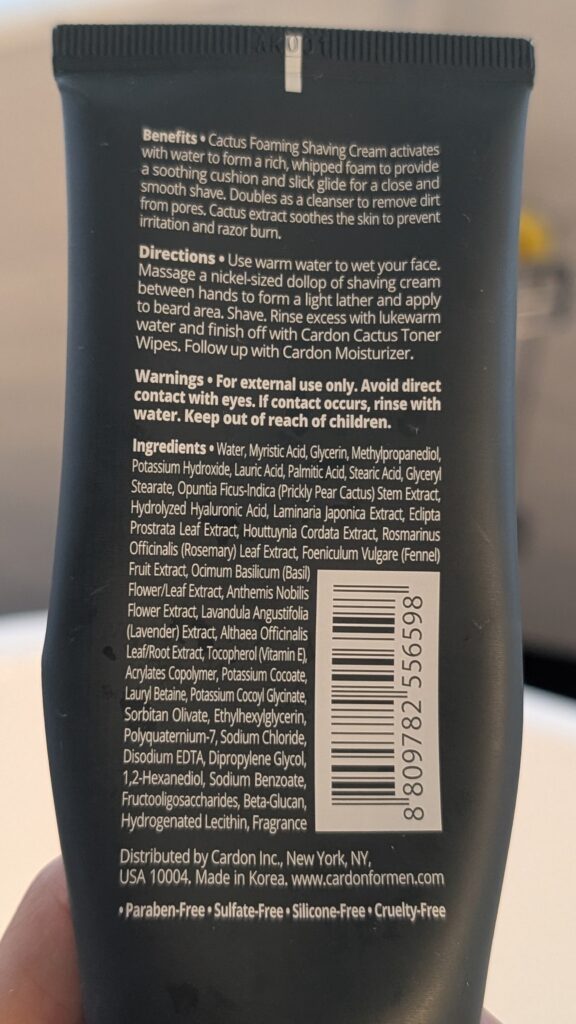
It’s listed as prickly pear cactus stem extract, and it’s the 10th ingredient out of 37. Water, glycerin, and the fatty acids that make up the soap base all come before it. Hyaluronic acid and nine other plant extracts come after it, and fragrance is last. On this label, cactus is one name in a crowd of plant extracts.
Prickly pear is a legitimate skincare ingredient. The ingredient database INCIDecoder describes it as soothing and hydrating and calls it promising, but says it couldn’t find independent published research. The shaving-specific results I found, including one saying it soothes men’s skin after shaving, come from a company that makes a prickly pear ingredient and tested its own product. For scale, that company recommends using its extract at 0.5% to 2%. I don’t know which extract Cardon uses or how much is in the tube.
So the claim isn’t made up, but preventing razor burn is a bigger promise than a 10th-place ingredient in a cream you rinse off can carry by itself. What this cream gave me was a cushion for the razor, and that’s the part I could feel.
3. The Packaging
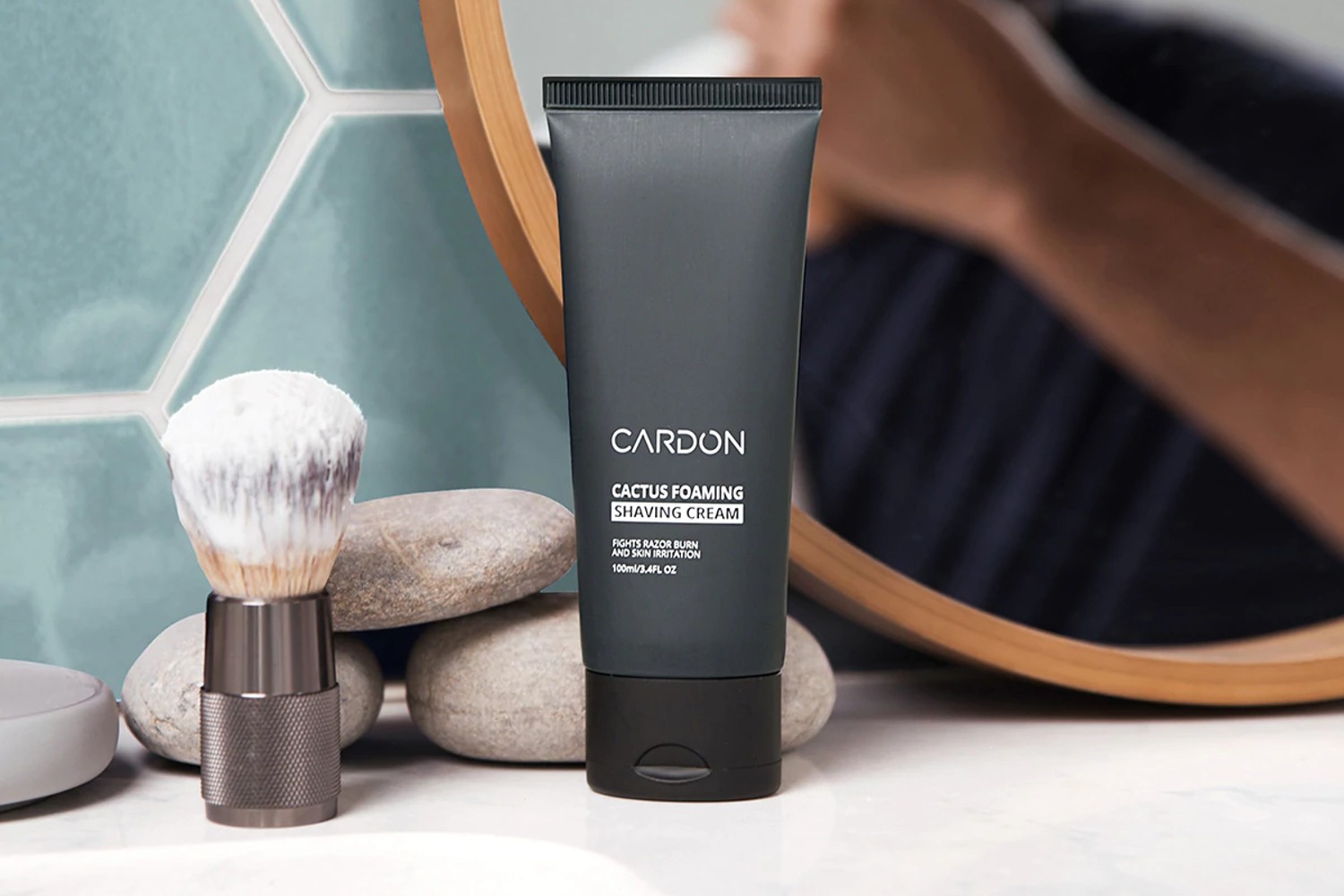
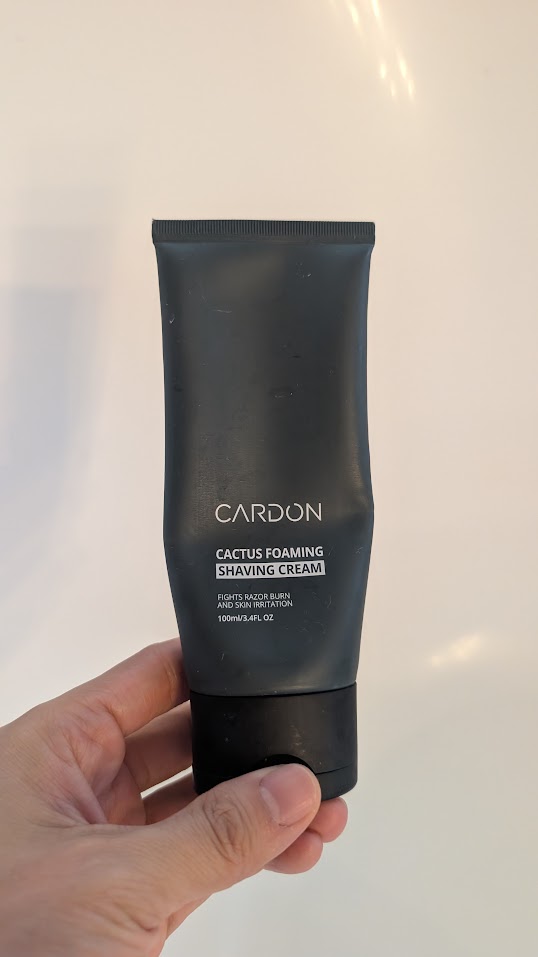
The cream comes in a 100 ml (3.4 fl oz) matte dark gray squeeze tube with a black flip cap. The front is minimal: the Cardon name in white, the product name, and the razor burn line. It looks clean and understated.
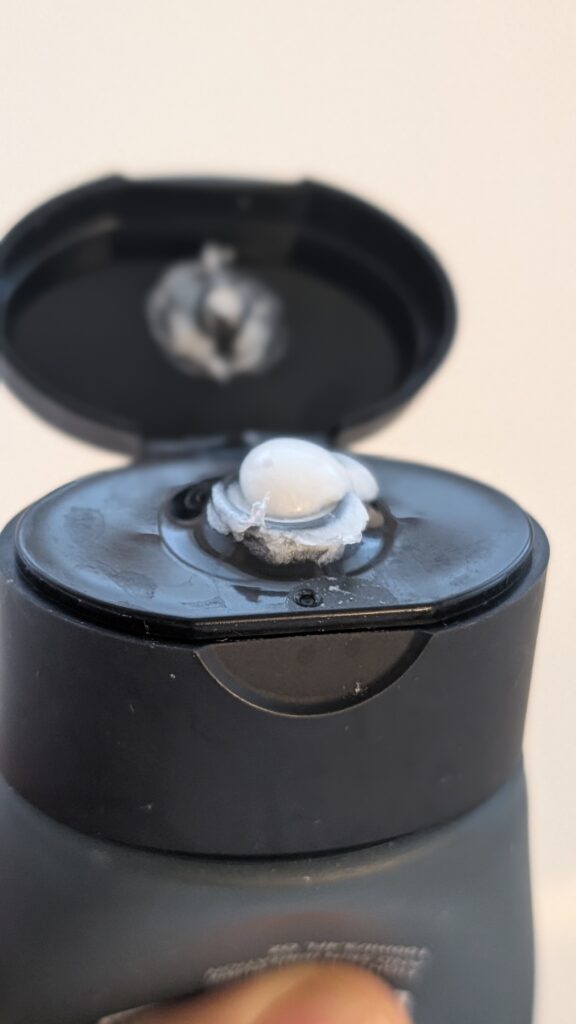
The tube is designed to stand upright on its cap, so the cream sits right at the opening. The downside shows up after a few uses: dried cream builds up around the opening and inside the lid. That’s a side effect of a thick cream in a flip cap, but it makes the cap messy, and I had to wipe it down to keep it closing cleanly.
The ingredient list is printed in small white type on the back of the dark tube, so it takes some effort to read.
4. How It Compares to a Standard Shaving Cream
Next to a canned shave foam or gel, the biggest difference is the routine. This one comes in a tube, and you work it into a lather in your hands before it goes on your face. It adds a few seconds, and I got used to it quickly.
The base is a soap: fatty acids (myristic, lauric, palmitic, and stearic) paired with potassium hydroxide, plus potassium cocoate. That’s the same kind of base traditional shaving creams are built on, and it’s what gives the lather its thickness.
For sensitive skin, a few things are in its favor. There’s no menthol or denatured alcohol on the ingredient list, the label says paraben-free, sulfate-free, and silicone-free, and it has glycerin and hyaluronic acid. What I’d keep in mind is the fragrance and the long run of plant extracts, including lavender, rosemary, fennel, basil, and chamomile. If your skin reacts easily, a fragrance-free shaving cream is the first thing I’d look at, and I’d test this one on a small area before using it all over.
In my experience, it shaves about like a good regular cream. The cactus story and the plant extracts are what set it apart on paper, and I couldn’t separate them from the cushion the lather already provides.
5. Pros & Cons
What works: a small nickel-sized amount works up into a thick, cushiony lather. The razor glides, and my skin felt comfortable afterward. The label says paraben-free, sulfate-free, and silicone-free, and there’s no menthol or denatured alcohol on the ingredient list. It also includes glycerin and hyaluronic acid. The 100 ml tube is easy to handle.
What doesn’t: cactus is 10th of 37 ingredients, so the razor burn claim is bigger than its placement suggests, and the evidence I found for it comes mostly from ingredient makers testing their own products. It lists fragrance and a long run of plant extracts, which may not suit sensitive skin. Dried cream builds up around the flip cap and inside the lid. The ingredient list is printed in small type on a dark tube. You also have to work the cream into a lather by hand.
Who it’s for: guys who like a cream they lather themselves and want a comfortable shave, and whose skin handles fragrance and plant extracts without trouble.
Who should skip it: anyone whose skin reacts to fragrance, and anyone buying it mainly for the razor burn promise.
SHOP: Cardon Cactus Foaming Shaving Cream
The Bottom Line
Cardon’s Cactus Foaming Shaving Cream is a comfortable, cushiony shaving cream, and the razor glides well on it. The cactus is the weakest part of the pitch. It sits 10th on the label, and the support for it comes mostly from ingredient makers instead of independent research.
If your skin handles fragrance and plant extracts well, it’s an easy cream to shave with. If your skin reacts easily, I’d go fragrance-free instead.
Overall Rating: 6.5/10
Full Ingredient List: Cardon Cactus Foaming Shaving Cream
Water, Myristic Acid, Glycerin, Methylpropanediol, Potassium Hydroxide, Lauric Acid, Palmitic Acid, Stearic Acid, Glyceryl Stearate, Opuntia Ficus-Indica (Prickly Pear Cactus) Stem Extract, Hydrolyzed Hyaluronic Acid, Laminaria Japonica Extract, Eclipta Prostrata Leaf Extract, Houttuynia Cordata Extract, Rosmarinus Officinalis (Rosemary) Leaf Extract, Foeniculum Vulgare (Fennel) Fruit Extract, Ocimum Basilicum (Basil) Flower/Leaf Extract, Anthemis Nobilis Flower Extract, Lavandula Angustifolia (Lavender) Extract, Althaea Officinalis Leaf/Root Extract, Tocopherol (Vitamin E), Acrylates Copolymer, Potassium Cocoate, Lauryl Betaine, Potassium Cocoyl Glycinate, Sorbitan Olivate, Ethylhexylglycerin, Polyquaternium-7, Sodium Chloride, Disodium EDTA, Dipropylene Glycol, 1,2-Hexanediol, Sodium Benzoate, Fructooligosaccharides, Beta-Glucan, Hydrogenated Lecithin, Fragrance